
Teen Study Space – lets explore some top tips!
Hi, I’m Jono. I run Cognito, a UK GCSE and A-Level revision platform used by about 1.5 million students. Becky was kind enough to let me put together a guest post for A Beautiful Space, because a question we get from parents at Cognito all the time is, “where should my teen actually be revising?” Turns out the room matters more than people think.
Here’s the thing about teen study spaces. The Pinterest version (white desk, brass cup of pencils, marble pinboard) almost never gets used in real life. The spaces that actually work are messier, lived in, and shaped by what keeps a teenager at the desk past 7pm. Across the parents we talk to, the same handful of things come up again and again.
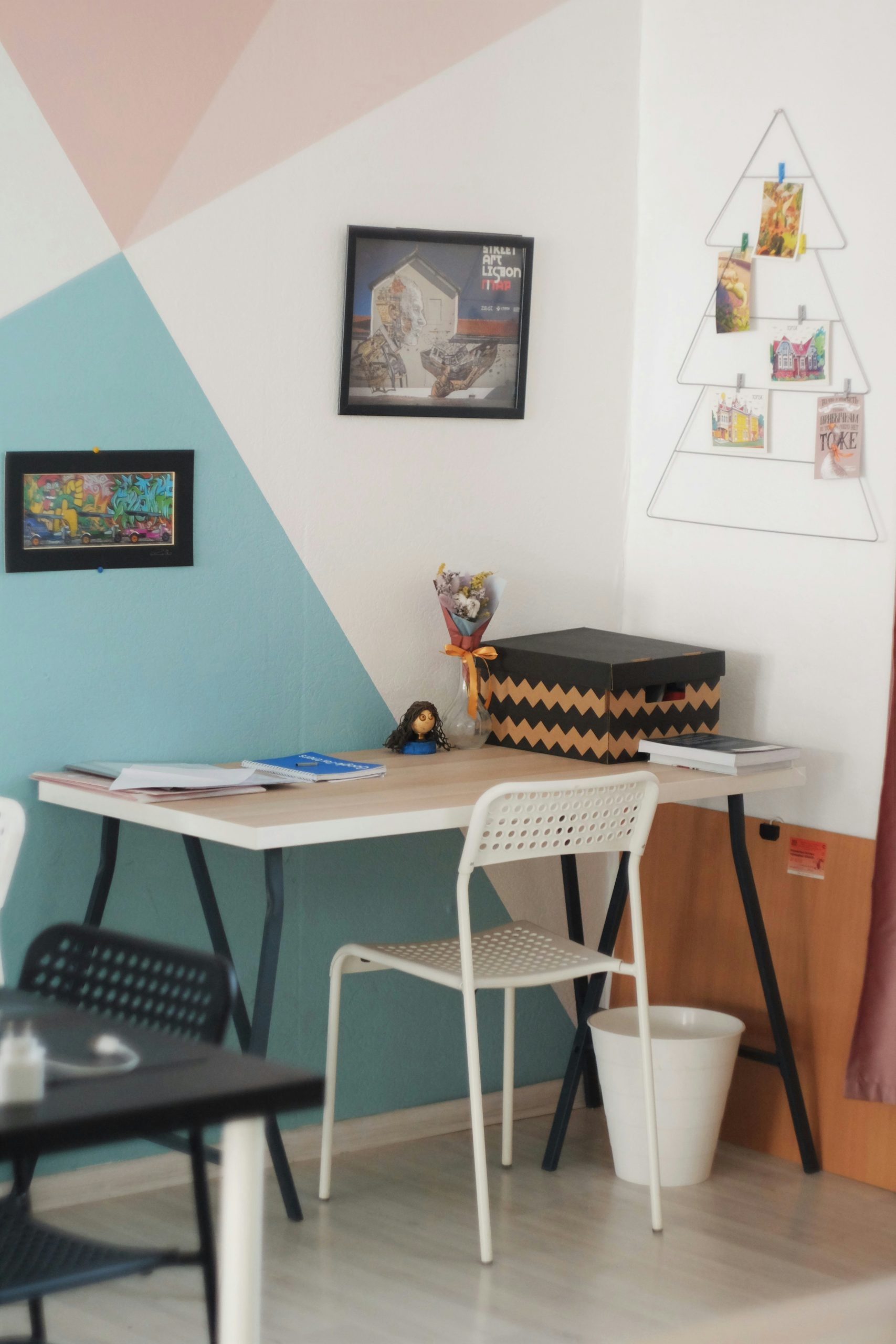
Teen Study Space Tips!
- Start with the light, not the desk
Natural daylight beats every desk lamp going. Position the desk side-on to a window (not facing it, because of the glare) and you’re already winning. For evenings, a warm 2700K lamp at face level works better than a bright overhead bulb.
- Choose a chair they can sit in for two hours
Most teen study chairs are bought to match the desk, which is how they end up making revision feel like a punishment. If the budget will stretch, a proper office chair with a bit of lumbar support is the single best investment. Used ones turn up on Facebook Marketplace for very little.
- Soft texture, not just hard surfaces
A rug under the chair, a cushion on the back, a throw within reach. Study spaces feel less clinical and more stay-a-while when there’s something soft in the frame.
- One inspiration wall, kept simple
Pinboard, framed print, a strip of magnetic paint. Pick one, not all three. Fill it with what they’re actually working towards: a calendar, the exam dates, a postcard from somewhere they want to go, a photo of their best mates. Motivational quotes age badly, so I’d skip those.
- A neutral palette with one anchor colour
Cream walls, oak desk, and one shade (sage, dusty blue, terracotta) running through the lamp, the cushion and the pinboard border. It calms the eye and stops the desk feeling like a primary-school corner.

- A dedicated home for the phone, away from the desk
A small dish on a shelf across the room works well. Not in a drawer (out of sight tends to become out of mind, and then it gets lost). Visible but not in arm’s reach is the sweet spot.
- Open storage, not closed
Closed boxes get ignored. Open shelving or a low bookcase next to the desk means folders and textbooks live where they’re used. A vertical magazine file per subject is a quietly excellent organisational hack.
- A whiteboard or noticeboard within line of sight
For the week’s topics, the next mock date, or a rough essay plan. Writing something on a board makes it slightly more real than typing it into a notes app, and it stays visible while they work.
- The “off” corner of the room matters too
The space your teen sees when they look up from the desk should feel calm rather than chaotic. A made bed across the room, a plant in the corner, a folded throw on a chair. Small things that say the rest of the room isn’t competing for their attention.
- The right revision tool
This last one matters more than any of the design choices. The space sets the conditions, but the tool does the actual work. If your teen needs help with GCSE Science or Maths specifically, Cognito is the platform we run. Free to use, with some limits on the free tier. Short videos and topic-by-topic practice that sit cleanly on the desk without taking it over. Try it free first, and if your teen finds it useful, A Beautiful Space readers get 20% off Pro with the code BEAUTIFUL20.
A teen study space earns its place by whether your teenager keeps choosing to sit there, not by how it photographs when nobody’s home. Cosy lighting, soft texture, a calm palette, the right tools, and a corner of the house that genuinely feels like theirs.
Guest post by Jono Ellis, CPO at Cognito. Partnered with A Beautiful Space. Cognito is free to use. Readers get 20% off Cognito Pro with the code BEAUTIFUL20.
