
How to Make a Miniature Garden with Kids – let’s take a look.
Creating a miniature garden is a wonderful hands-on craft for children and a brilliant way to encourage creativity outdoors. These tiny worlds can be made again and again, and every single one can look completely different. That’s part of the magic.
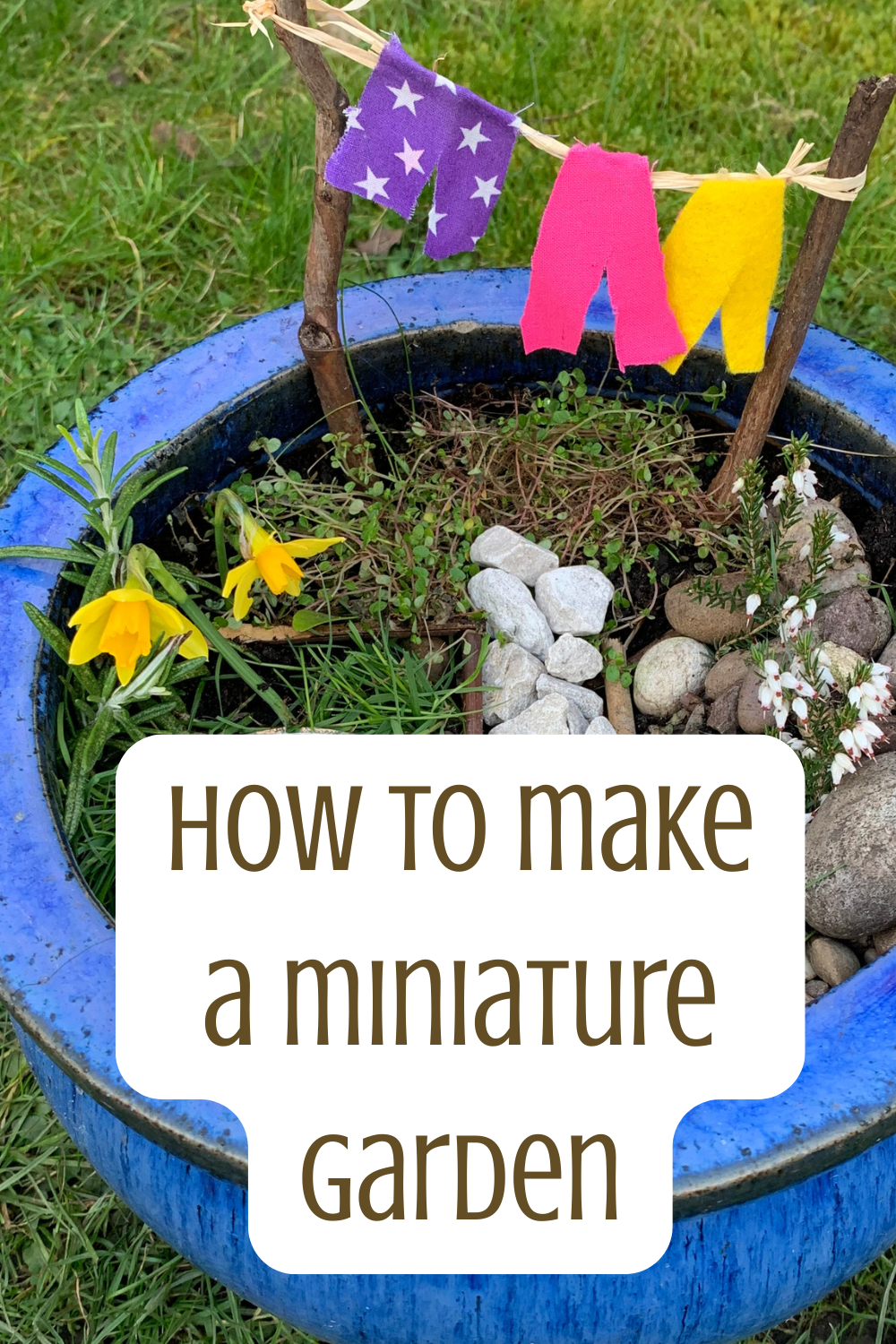
A miniature garden can be anything you imagine. It might become a fairy garden, a tiny home for toy figures, or simply a beautiful decoration for your patio, garden, or balcony.
The best part is that you don’t need special supplies. Nature itself provides most of the materials you need—moss, stones, twigs, and leaves. Add a few recycled craft bits from around the house and you’ll have everything you need to create a charming miniature landscape.
This spring nature craft is perfect for children because it combines outdoor exploration, imaginative play, and simple crafting all in one activity.
Whether your mini garden ends up with fairy houses, a tiny campsite, or a colourful washing line, the most important rule is simple: there are no rules when you’re being creative.
Why Miniature Gardens Are a Brilliant Craft for Kids
Mini gardens are more than just fun crafts. They’re also fantastic for learning and development.
Children get to:
-
Spend time outdoors collecting natural materials
-
Practice planning and design skills
-
Develop creativity and storytelling
-
Work with textures like soil, moss, and stones
-
Care for living plants
If you add herbs or small plants, kids can even watch their tiny garden grow and change over time, which makes the project even more exciting.
Miniature gardens can also be made indoors or outdoors, making them a great activity for any season.
What You Need to Make a Miniature Garden
One of the great things about this craft is that you can use almost anything you already have at home.
Container Ideas
Your miniature garden will need a base or container. Some great options include:
-
Tin foil trays
-
Tupperware boxes
-
Plant pots or planters
-
Hanging baskets
-
An old bowl
-
A large teacup
-
A bucket
Don’t worry about perfection—upcycling household items makes the craft even more fun.
Natural Materials for your miniature garden
Collect these from your garden or a local walk:
-
Moss
-
Small flowers
-
Stones or pebbles
-
Twigs and sticks
-
Leaves
-
Soil
-
Gravel or shingle
-
Tiny herbs or plants
Craft Supplies
You may also want:
-
Fabric scraps
-
String or twine
-
Glue
-
Small recycled materials (cardboard, bottle caps, etc.)
Step-by-Step: How to Make a Miniature Garden
1. Start With a Simple Plan
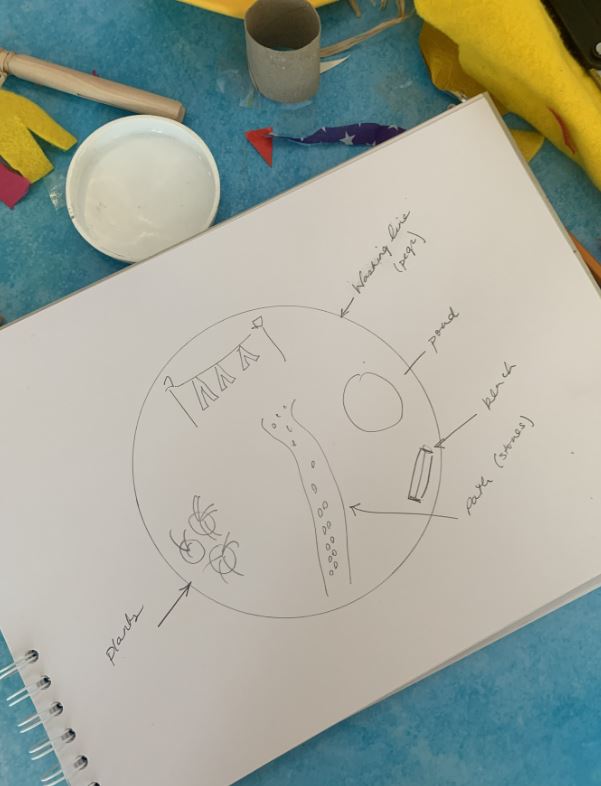
Before you begin building, it helps to draw a quick sketch of how you’d like your miniature garden to look.
You might include:
-
Paths made of pebbles
-
A tiny house or cave
-
A fairy garden scene
-
A little seating area for toy figures
Planning helps children think creatively and organise their ideas.
2. Create Your Soil Base
Fill your container with soil to create the foundation of your miniature garden.
This base allows you to:
-
Push in small plants
-
Anchor stones and sticks
-
Shape paths and hills
Try gently pressing the soil down so it’s stable enough to build on.
3. Build Pathways and Structures
Next, add the larger and sturdier elements.
Use stones and pebbles to create tiny pathways or patios. Twigs can become fences, arches, or little frames for decorations.
If you want buildings or structures, now is the time to add them.
Some fun ideas include:
-
A teepee made from sticks
-
A tiny Stonehenge made from stacked rocks
-
A little cave built with stones
-
A small fairy house
4. Add the Decorative Details
Once the main parts of the garden are built, it’s time for the fun details.
These are the elements that bring your miniature world to life.
You could add:
-
Mini bunting made from paper or cardboard
-
Tiny furniture made from twigs
-
Fabric flags
-
Small toy figures
Add delicate items at the end so they don’t get buried in soil or knocked over while building.
Create a “Star Feature” for Your Mini Garden
I always like to add a main feature that becomes the focus of the garden.
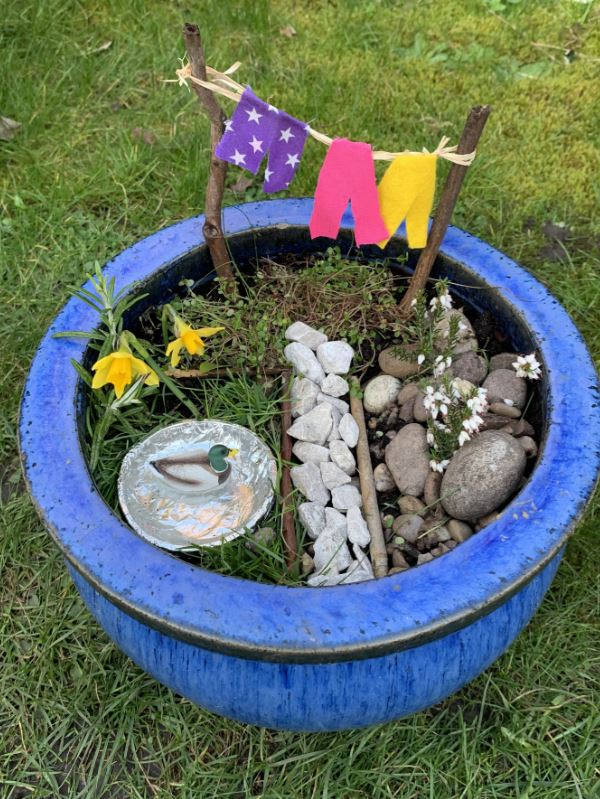
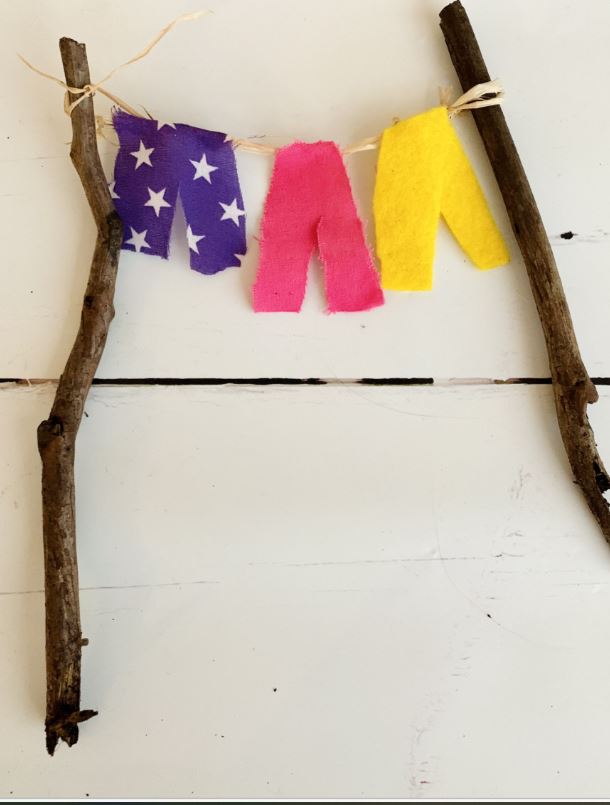
For my miniature garden, the star of the show was a colourful washing line.
I made it by tying a piece of string between two twigs and cutting tiny pieces of fabric to look like clothes. Then I glued them onto the string so they looked like they were drying in the sunshine.
It added colour and personality to the garden, and it was very simple to make.
Other ideas for a star feature could be:
-
A tiny teepee
-
A fairy door
-
A flag pole
-
A mini scarecrow
-
A pebble stone circle
-
A tiny campsite with a twig “campfire”
Let your imagination guide you!
This activity is taken from my book A Year of Nature Craft and Play

Finishing Your Miniature Garden
Once everything is in place, give your miniature garden a gentle spray of water. This helps settle the soil and stops everything from looking dry and dusty.
You could also sprinkle wildflower seeds into the soil so your mini garden continues to grow and change.
Watching plants sprout and bloom adds another layer of magic to the project.
How to Care for Your Mini Garden
If your miniature garden will live outside, try to place it somewhere a little sheltered so it doesn’t get damaged by strong wind or heavy rain.
Every now and then you can:
-
Add water if the soil becomes dry
-
Replace plants that have died
-
Rearrange decorations
-
Add new seasonal details
Mini gardens are meant to evolve over time.
Making an Indoor Mini Garden
If you’d prefer to keep your miniature garden indoors, you can use an even wider mix of materials.
Indoor mini gardens are perfect for:
-
Craft supplies
-
Recycled materials
-
Toy accessories
-
Painted decorations
For example, bunting can easily be made from cut pieces of cardboard or old boxes.
An indoor miniature garden also makes a lovely handmade gift, especially for grandparents or relatives who may not get out into the garden very often.
It’s a beautiful way to bring a little piece of nature inside.
Frequently Asked Questions
What age is suitable for making a miniature garden?
Mini gardens can be enjoyed by children of almost any age. Younger children may need help with cutting or gluing, while older kids can design and build more detailed scenes.
What plants work best in a miniature garden?
Small herbs, moss, succulents, and tiny ground-cover plants work very well. They stay small and are easy to maintain.
Can miniature gardens stay outside?
Yes! Just make sure you use weatherproof materials and place the garden somewhere protected from heavy rain and strong winds.
How long do mini gardens last?
It depends on the materials and plants used. With a little care, watering, and occasional rearranging, they can last for months or even longer.
Can you make a miniature garden without plants?
Absolutely. Many mini gardens use only stones, twigs, and craft materials. These decorative gardens can last indefinitely.
Final Thoughts
Making a miniature garden is one of those simple crafts that sparks huge creativity. Children love designing tiny worlds, and no two gardens will ever be the same.
It’s also a lovely way to slow down, spend time outdoors, and enjoy working with natural materials.
So grab a container, head outside to collect some treasures, and start building your own magical mini garden.
You might be surprised at just how enchanting a tiny world can be.
Also see how to make a woodland sprite
