
Travel takes you places where help isn’t always a few minutes away. A remote beach in Thailand. A hiking trail in Patagonia. A cruise ship in the middle of the Atlantic. A small village where the nearest hospital is two hours by car. Most trips go fine. But when something goes wrong, the gap between someone collapsing and paramedics arriving can be the difference between a survival story and a tragedy.
That gap is where CPR lives.
Why CPR Belongs on Every Traveler’s Pre-Trip Checklist
The Reality of Medical Emergencies Abroad
Sudden cardiac arrest doesn’t pick convenient moments. It happens at airports, on tour buses, in hotel lobbies, and during the activities people travel specifically to do, like diving, hiking, eating unfamiliar food, or drinking too much at altitude. The American Heart Association estimates that effective bystander CPR can double or triple a person’s chance of survival, but only if it starts within the first few minutes.
Now picture that emergency happening somewhere you don’t speak the language. You don’t know the local equivalent of 911. The nearest defibrillator might be locked behind a hotel front desk. The ambulance, if one is even available, could take 20 minutes or more to reach you.
This is the situation travelers walk into all the time without thinking about it. Resources like CPR911.org cover what cardiac emergencies actually look like and what to do in the critical minutes before professional help arrives. Knowing the signs of cardiac arrest, how to position someone, the rhythm of compressions: none of it requires a medical degree, but all of it requires having learned it once.
Why Travelers Are More Exposed Than They Realize
People do things on vacation they don’t do at home. They eat richer food, drink more, sleep less, push their bodies harder, and often skip medications or routines that keep underlying conditions stable. Long flights raise the risk of clots. High altitudes strain the heart. Older travelers in particular tend to overestimate what their bodies can handle on a packed itinerary.
Then there are the people around you. Group tours skew older. Family trips include grandparents. Cruise ships are essentially floating retirement parties with restaurant access. The odds that someone in your immediate vicinity will need emergency help during a two-week trip are not trivial, especially if you’re traveling with anyone over 60.
Most travelers prepare for the wrong things. They buy travel insurance, pack first-aid kits with band-aids and antiseptic wipes, and call it good. That’s fine for scraped knees. It’s not fine for the medical situations that actually kill people.
Getting Trained Before You Go
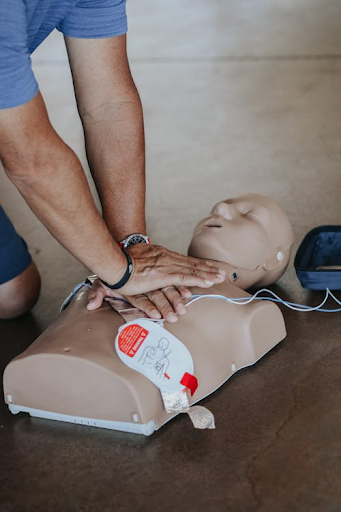
Reading about chest compressions on your phone at 30,000 feet isn’t going to help anyone. Real CPR knowledge comes from doing it with your hands, on a mannequin, with someone correcting your form. The good news is that getting certified takes a few hours, costs less than most checked baggage fees, and stays useful for the rest of your life.
If you’ve never taken a class before, the unknowns can feel like a barrier. How long does it take? Is there a written test? Do you really have to do mouth-to-mouth on a stranger? Walking through what to expect during CPR training clears most of that up. Modern courses focus heavily on hands-only techniques, use mannequins instead of other students, and structure the certification so most people walk out feeling more capable than they expected.
Online and hybrid options now exist for travelers who want to knock it out before a trip without rearranging their schedule. Some let you do the lecture portion at home and the hands-on skills check separately, which works well if you’re squeezing certification in between work deadlines and a flight.
Pack the Skill, Not Just the Kit
There’s a strange psychology to travel. People will research the best neighborhood to stay in for two weeks, read 40 restaurant reviews, and download three different translation apps. Then they’ll get on a plane to a country where they have no idea what to do if the person next to them stops breathing.
CPR isn’t a glamorous skill. Nobody puts it on their travel packing list next to the universal adapter and the sunscreen. But of all the things you can carry into an unfamiliar place, the ability to keep someone alive for ten minutes might be the most useful one you’ll ever wish you had.
Get certified before the next trip. The class is short. The skill is permanent. And somewhere, on some future vacation you haven’t even booked yet, someone might need you to know it.
