
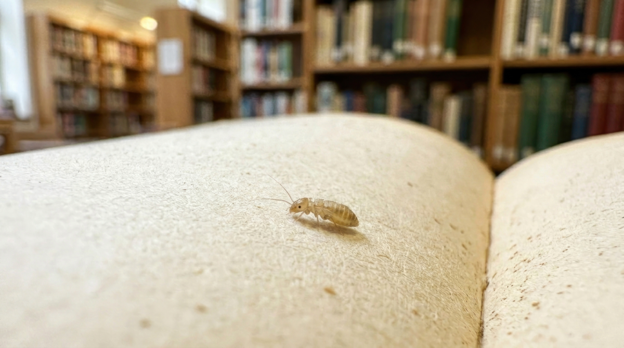
There’s a particular kind of jump most of us have had at some point: reaching for an old paperback, or switching on the bathroom light at night, and watching something silvery dart for cover. It moves too fast to get a proper look at, and by the time you’ve decided it wasn’t your imagination, it’s already gone. Most people shrug it off as a one-off. It usually isn’t.
That silvery streak is almost certainly a silverfish, and a silverfish infestation tends to say less about how clean your home is and more about something going on behind the scenes with moisture. They’re one of the more misunderstood pests in a British home, partly because they look faintly alien and partly because the damage they do is so quiet that it’s usually noticed on the book or the wallpaper long before the insect itself.
What You’re Actually Looking At
Silverfish are small, wingless insects, typically around 12mm long, with a metallic silver-grey sheen, long whip-like antennae, and three tail-like filaments at the rear that make them easy to tell apart from anything else that might be scuttling around a bathroom cupboard. They’re fast, genuinely fast for their size, which is why they’re so hard to catch a proper look at before they vanish under a skirting board or behind a stack of magazines.
They’re also entirely nocturnal, which is why most sightings happen when a light gets switched on unexpectedly. During the day they stay tucked into cracks, crevices, and dark undisturbed corners, which is exactly why a genuine infestation can build up for months before anyone in the house actually spots one.
Why They Turn Up in a Bookshelf Before They Turn Up Anywhere Else
This is the part most people get backwards. Silverfish aren’t drawn to books and wallpaper because they’re hunting for something to eat in the way a moth hunts for wool. They’re drawn to moisture first, and paper products happen to be an excellent secondary food source once they’re already settled somewhere damp.
A council pest control advice page sums this up plainly: Oxford City Council’s guidance on silverfish notes that silverfish are drawn to moist areas such as kitchens, bathrooms, and basements, often hiding in damp books, paper, cupboards, and under wallpaper, and that their presence can itself point to a moisture problem in the home. In other words, the insect is frequently a symptom rather than the actual issue.
That’s particularly relevant for anyone who’s already looked into getting a damp survey done, whether on a period property with original skirting and old plaster, or a newer build where condensation has started collecting somewhere out of sight. A silverfish sighting in a bookshelf or airing cupboard is often the first visible clue that moisture is building up somewhere nearby, well before a damp patch becomes obvious on a wall.
What They’re Actually Eating in There
Once settled, silverfish feed on the protein-rich gums and pastes used in bookbinding and wallpaper adhesive, along with starchy residues in paper, cardboard, and natural fibres like cotton and linen. Old paperbacks, vintage hardbacks with cloth bindings, and inherited photo albums are particularly appealing, since the glues and papers used decades ago tend to be exactly the kind they favour.
The damage itself is slow and easy to miss at first: thin notches eaten into the edges of pages, irregular bare patches on wallpaper where the surface layer has been grazed away, small yellowish stains, and tiny pepper-like droppings in the corners of a shelf or drawer. None of it looks dramatic on its own, which is usually why it goes unnoticed until a genuinely treasured book turns out to have noticeably thinner, almost lace-edged pages.
The Cheap Fixes That Solve Most of These Problems
The good news is that most silverfish issues are fixed with habits rather than products, and none of it requires ripping anything out.
- Deal with the damp, not just the insect. Run a dehumidifier in persistently damp rooms, keep extractor fans on long enough after a shower or bath to properly clear the air, and check that tumble dryers are vented outside rather than into the room.
- Give books and papers some airflow. Pulling shelved books slightly away from an exterior wall, and avoiding stacking damp boxes directly against skirting boards, makes a space considerably less appealing.
- Clear out what you don’t need. Old newspapers, cardboard boxes, and papers left in a loft or under-stairs cupboard are exactly the undisturbed clutter silverfish thrive in.
- Seal obvious gaps. Cracks around skirting boards, behind bath panels, and where pipework passes through a wall are common access points and are usually simple to seal with standard filler.
- Check seasonally rather than waiting for a sighting. A quick look behind stored boxes or under a bathroom cabinet once every few months catches a developing problem long before it reaches an actual infestation.
When It’s Worth Getting Someone In
A single silverfish spotted now and then, particularly in a bathroom, usually isn’t worth worrying about. It’s a different situation when sightings become frequent across more than one room, when damage starts appearing on multiple items rather than one unlucky book, or when the underlying damp problem is clearly bigger than a single dehumidifier can realistically manage.
Firms such as Clearzone Pest Control typically treat this kind of problem by identifying where the moisture is actually coming from first, rather than simply spraying the areas where insects have been seen, since treating the symptom without addressing the damp tends to mean the same issue reappears within a season.
Quick Questions
Are silverfish dangerous or likely to bite? No. They don’t bite, sting, or spread disease, and most pest guidance treats them as a nuisance and a sign of dampness rather than a health risk.
Why do I only ever see them at night? They’re nocturnal and spend daylight hours hidden in cracks, crevices, and undisturbed dark spaces, which is also why a lit room at night is the most common place to spot one moving.
Can a dehumidifier alone get rid of them? It helps significantly by making the environment less appealing, but existing eggs and insects usually need the clutter and access-point fixes above as well, particularly in a room that’s already had a sustained damp problem.
Does seeing silverfish mean my home is dirty? Not particularly. Moisture and clutter matter far more than general cleanliness, which is why they turn up just as readily in a well-kept home with one damp corner as anywhere else.
A silverfish darting across the floor isn’t something to panic about, but it’s rarely worth ignoring either. Treat it as a small, early warning rather than a one-off oddity, and it tends to be one of the cheapest pest problems in the house to put right properly.
