
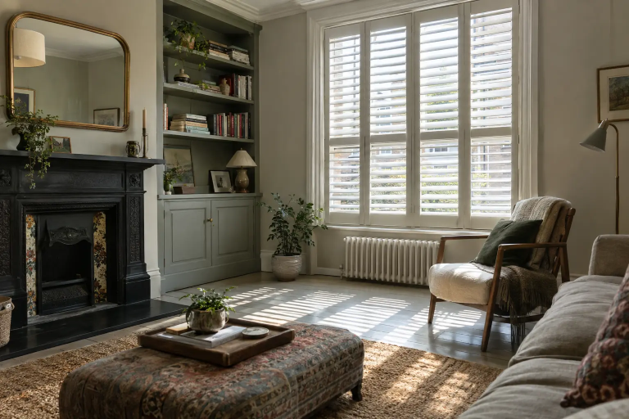
Plantation shutters in a living room
Windows are often the last thing we think about when decorating a room, yet they can make or break the finished look. The wrong blind in a bedroom means early wake-ups in summer. The wrong curtain in a kitchen ends up smelling of last night’s dinner. And a bathroom window with nothing on it at all is a conversation you’d rather not have with the neighbours. Whether you’re choosing window blinds in Oxford or dressing a home elsewhere in the UK, start with what each room needs.
The trick is to stop thinking of window dressing as one decision for the whole house and start treating it room by room. Each space has a different job to do, and the window dressing should help it do that job. Here’s how to approach it, room by room, with the questions to ask before you buy.
Start with three questions
Before you look at a single fabric sample, ask yourself three things about each window. How much light do you want in the room, and when? How much privacy do you need? And how does the window itself behave: is it a bay, a sash, a tall landing window, a set of patio doors, or a small square one over the sink?
The answers tell you more than any trend article will. A north-facing living room with a big bay needs something that lets in every scrap of light during the day. A south-facing bedroom needs the opposite. Once you know what each window has to do, choosing between blinds, curtains and shutters becomes much simpler.
The living room: layer for flexibility
The living room works hardest of any room in the house. It’s bright and sociable in the afternoon, cosy and private in the evening, and it needs to look good at both ends of the day. That’s why layering works so well here.
A simple roller or Roman blind handles the daytime, filtering glare without blocking the view. Full-length curtains then come into their own at night, adding warmth, softness and a sense of the room being properly closed up. If you have a bay window, blinds fitted to each section of the bay look neater than curtains struggling around the angles, and you can still add a curtain pole across the front for the evenings.
If your taste runs to calm, natural interiors, the japandi style is worth a look for the living room: pale wooden Venetians or plain linen-look rollers, a sheer curtain layered over the top, and nothing glossy or patterned. It suits period houses and modern flats equally well and never looks dated.
The bedroom: light control first
Nobody chooses a bedroom window dressing for how it looks at three in the afternoon. You choose it for six in the morning in June. Blackout is the priority, and there are more ways to achieve it than you might think.
Blackout roller blinds are the simplest option and sit neatly inside the window recess. Roman blinds with a blackout lining look softer and more finished. For the deepest darkness, pair a blackout blind inside the recess with lined curtains hung outside it, so there’s no gap for light to creep around the edges.
Shutters are the other serious contender for bedrooms. Solid panels block light completely, while louvred panels let you tilt the slats to wake up gently or close them fully for a lie-in. If you’re weighing up the options, a good plantation shutters buying guide will walk you through louvre sizes, full-height versus tier-on-tier and what to expect on cost. They also cut down street noise noticeably, which is worth knowing if your bedroom faces a road.
The kitchen: practical and wipeable
Kitchen windows live in a world of steam, splashes and cooking smells, so fabric is rarely the answer. Wooden or faux-wood Venetian blinds, waterproof rollers and shutters all wipe clean and don’t hold onto odours. If the window is right behind the sink or hob, go for something that lifts well clear, such as a roller blind that sits high in the recess or café-style shutters that cover only the lower half of the window and leave the top open for light.
Avoid long curtains in the kitchen altogether. They collect grease, get in the way of worktops and, near a hob, are simply not safe.
The bathroom: privacy without losing the light
Bathroom windows are usually small, frosted or both, and they get wet. Privacy is the main concern, but you don’t want to give up what little natural light there is.
Waterproof roller blinds in a pale colour are the practical choice, and they come in far nicer finishes than they used to. Shutters work beautifully in bathrooms too, especially the half-height café style, which keeps the lower part of the window private while the top stays open. Whatever you choose, make sure it’s rated for a humid room, or you’ll be replacing it within a year.
Patio doors and the dining room
Wide glazing is where most people struggle. Patio doors, bifolds and the big dining room window all need something that covers a large span, opens fully out of the way and doesn’t catch every time someone walks through.
This is where a good vertical blind still earns its place. Modern verticals come in soft fabrics rather than the stiff office slats of old, they draw completely to one side, and the louvres tilt to control glare on the table without blocking the garden view. For bifolds, perfect-fit blinds clipped to each door panel are the other tidy option, because they move with the doors.
Hallways, landings and awkward windows
Stairwell and landing windows are often tall, hard to reach and overlooked. A single long Roman or roller blind with a cord or chain you can actually get to is usually the answer, and a motorised blind is worth considering for windows you’d otherwise need a ladder to reach.
For unusual shapes, arched tops, very wide spans or windows set into sloping ceilings, off-the-shelf products rarely fit well. This is where made to measure earns its keep: cut to the exact dimensions of the opening, the blind sits flush, hangs straight and looks as though it was always meant to be there. A local fitter who measures for you makes the difference here; anyone looking for blinds in Batley or the surrounding West Yorkshire towns, for example, can have every awkward window in the house measured in a single home visit.
A few finishing rules
Measure twice, then measure again, and decide early whether each blind will sit inside or outside the recess, as it changes the measurements. Hang curtain poles higher and wider than the window frame to make the window look bigger. Keep the colour palette of window dressings consistent through the rooms you can see from one another, so the house flows rather than jumps.
Think about the view from outside as well as inside. A terrace where every window has a different style of blind looks unsettled from the street; matching the front windows, even if the back of the house varies, gives the whole home a more considered look.
Most of all, don’t rush it. Window dressing is one of the few decorating decisions you’ll live with every single day, morning and night. Whether you’re choosing blinds for a cottage in the Cotswolds or plantation shutters for a city terrace, get it right room by room and the whole house feels calmer, warmer and more finished.
