
Curtain Trends for 2027 – I’ve been looking at what’s coming through for interiors in 2027, and one thing that keeps catching my eye is just how much attention is being given to curtains and window treatments.
For quite a few years now, curtains have often been treated as the practical bit you add at the end. We choose the sofa, paint the walls, buy the furniture and then, almost as an afterthought, think about what we’re going to do with the windows.
I think that’s changing.
Curtains are becoming much more considered. We’re seeing more colour, more pattern, more texture and, perhaps most importantly, much more thought about how a window treatment actually works within the room.
So, if you’re thinking about updating your curtains, or simply wondering what we’re going to be seeing more of over the next year, these are the top curtain trends for 2027 that I think are worth knowing about.
Top 10 Curtain Trends for 2027
1. Floor-to-ceiling curtains
This is one trend that I don’t see disappearing any time soon.
There is something so effective about taking curtains right up towards the ceiling and allowing them to run all the way down to the floor. Even a relatively ordinary window can feel much more substantial when it is framed generously with fabric.
It also helps to create the illusion of height, which is particularly useful if you have lower ceilings.
The important thing is getting the proportions right. Curtains that are too short or hung too close to the top of the window can make a room feel smaller. Taking them higher and wider tends to give a much more elegant result.
And I still prefer curtains to just touch or very slightly break on the floor rather than sitting several inches above it.
It’s a small detail, but it makes a surprisingly big difference.
2. Layered window treatments
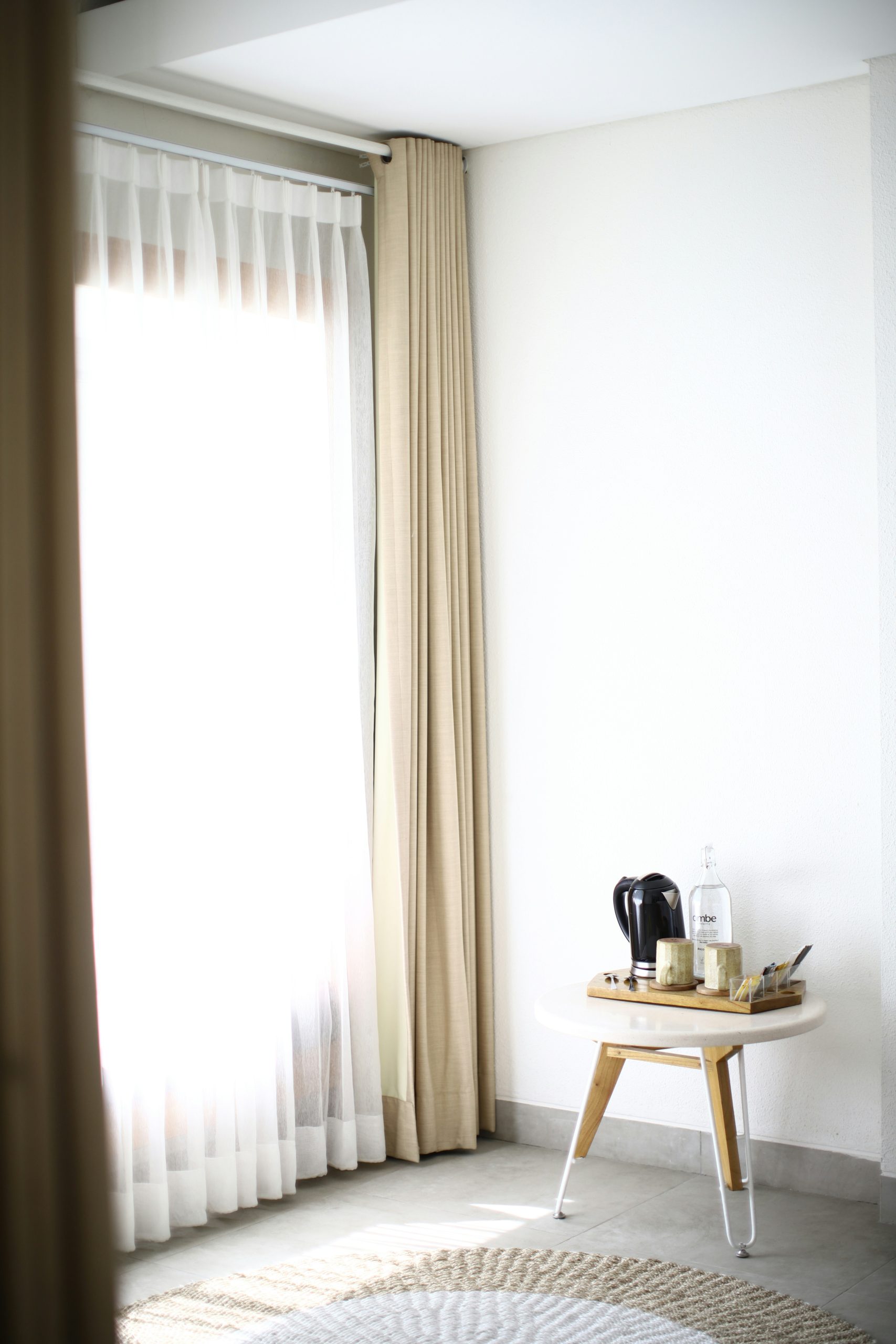
Another of the 2027 curtain trends I’m expecting to see much more of is layering.
Think beautiful sheers behind fuller curtains, or blinds combined with decorative curtains.
There’s a practical reason for this, of course. A sheer can give you privacy during the day while still allowing natural light into the room, while a heavier curtain can provide privacy, warmth and darkness when you need it.
But I also love the way layering makes a window feel.
It gives the fabric more depth and movement and makes the whole treatment feel much more intentional.
It doesn’t have to be complicated either. A simple linen-look sheer with a beautiful heavier curtain can be enough to completely change the feel of a room.
3. Beautiful, tactile fabrics
I think we’re going to see much more interest in how curtains feel, rather than simply what colour they are.
Linen and linen blends remain hugely appealing, particularly for relaxed and natural interiors, but there is also a growing interest in velvet, wool, silk and fabrics with a more obvious texture and weave.
This is particularly lovely in neutral rooms because texture gives you interest without needing lots of colour.
A soft, slightly slubby linen curtain can look completely different from a smooth, flat fabric in exactly the same colour.
It’s one of those things that is much easier to appreciate in person than in a photograph.
4. Warmer curtain colours
If you’ve been following interior trends, you’ll know that we’ve been moving away from the cooler greys and stark neutrals that dominated for so long.
That shift is continuing into 2027.
For curtains, I’m expecting to see lots of warm, earthy shades – olive and moss greens, clay, terracotta, tobacco, warm browns and richer reds.
There will still be plenty of neutrals, but they are becoming warmer and more interesting.
Creams, oatmeal, natural linen and soft beige work beautifully because they don’t compete with the rest of the room, but I think we’re becoming much more confident about using the window as an opportunity to introduce colour too.
And personally, I’d much rather see a slightly unexpected curtain colour than simply choosing the safest beige because you’re worried you might get bored.
5. Patterned curtains
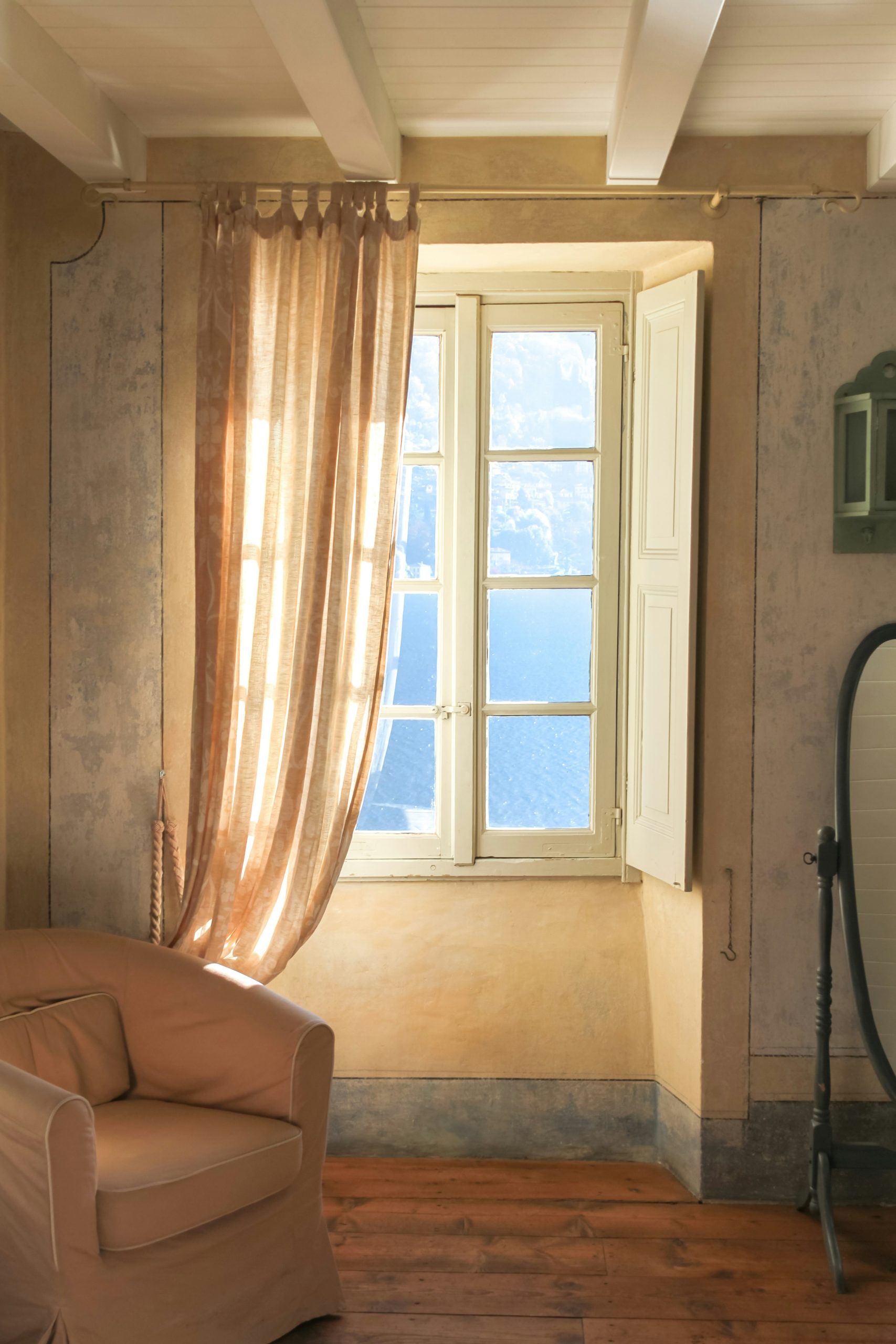
I’m very pleased to see pattern making its way back onto windows.
For a long time, plain curtains have been the safe option, and there’s absolutely nothing wrong with a beautiful plain curtain. But a patterned curtain can add so much personality to a room.
Florals, botanical designs, stripes, checks and traditional-looking patterns are all appearing more strongly.
I particularly like the slightly old-fashioned feel of some of these designs. They can make a room feel collected rather than decorated all at once.
And you don’t necessarily need to have a very traditional interior to use them.
A beautiful floral curtain can look surprisingly contemporary when it is paired with simple furniture, natural materials and modern lighting.
6. Decorative details
There is also a renewed interest in the details of a curtain.
Contrast piping, braid, borders, fringe and other decorative trims are becoming much more visible, particularly in more traditional and layered interiors.
I think this is partly connected to the wider move towards making homes feel more individual.
When so much of what we buy is mass produced, those little details can make a window treatment feel much more bespoke.
Even something as simple as a contrast edge around a plain curtain can make it feel considerably more special.
And yes, I think we’ll be seeing more pelmets too – although thankfully in a much more tailored and contemporary way than some of us may remember.
7. A softer, more romantic approach
There has been so much focus on minimalism and clean lines that I think people are beginning to crave a little softness again.
This is where fuller curtains, gentle pleats, florals, pretty fabrics and a slightly more romantic approach come in.
It doesn’t mean turning your home into a country house overnight.
In fact, I think this look works best when it is mixed with something more contemporary.
A traditional floral curtain with a simple modern bed, for example, can look much fresher than trying to make the entire room traditional.
The trick is not to recreate a period interior. It’s about borrowing some of that softness and charm and bringing it into a modern home.
8. Wave curtains and concealed tracks
For those who prefer a more contemporary look, wave curtains are still very much worth considering.
The folds are regular and understated, and when the curtains are hung from a ceiling-mounted or concealed track, the hardware almost disappears.
This can be particularly effective across large windows and bi-fold or sliding doors, where you often have a lot of glass to deal with.
I like this style because it feels clean without feeling stark.
The fabric remains the focus rather than the pole or track.
9. Curtains being used beyond the window
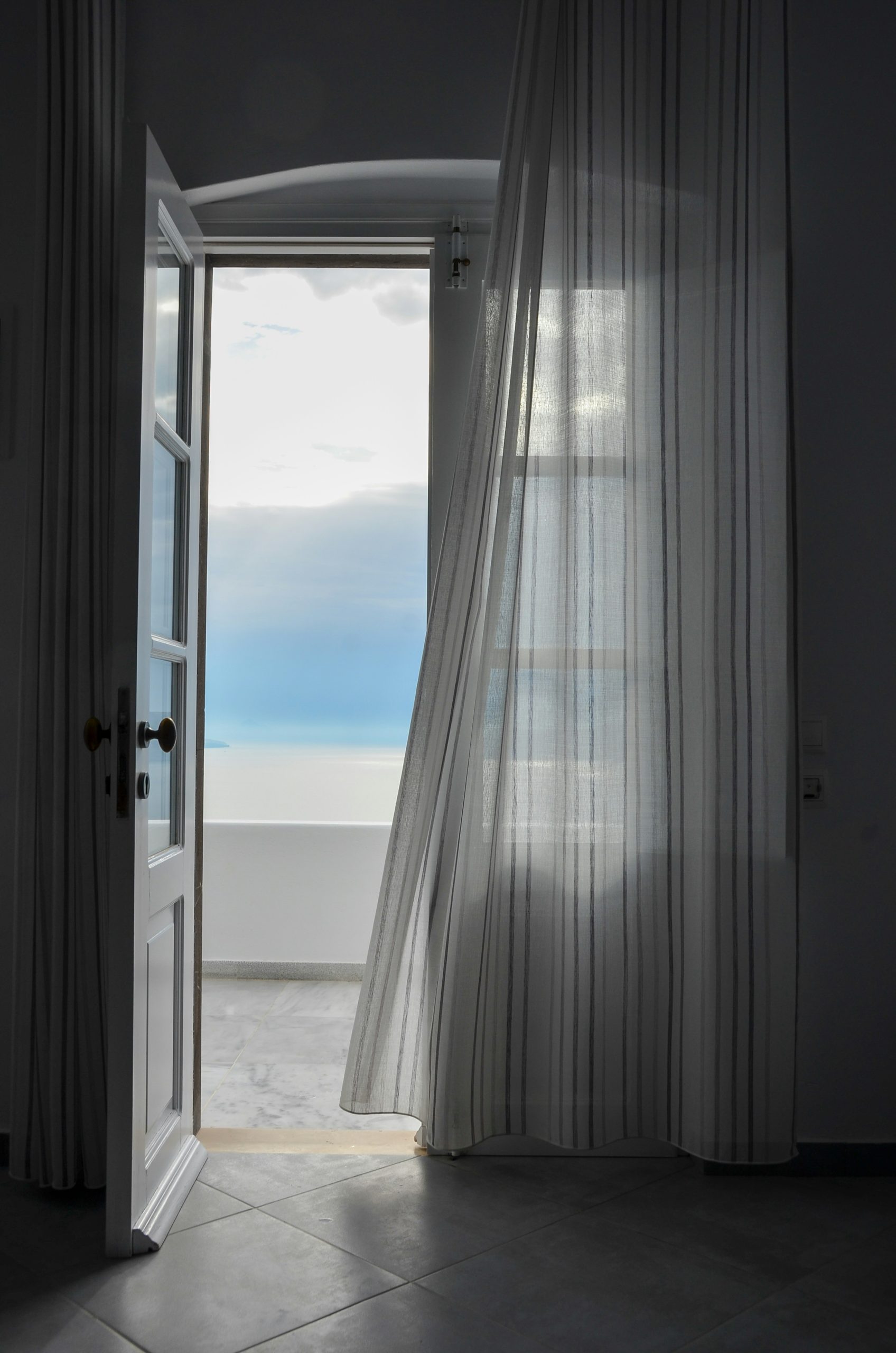
One of the more interesting developments is that we’re increasingly using curtains for things other than simply covering windows.
They can be used as room dividers, behind beds, across doorways or to soften an awkward area of a room.
They can even be used to conceal storage.
I think this makes a lot of sense, particularly in homes where space needs to work hard.
Unlike a permanent wall, a curtain can be opened and closed depending on what you need.
And there’s something lovely about the softness that fabric brings when you use it in this way.
10. Window treatments that are designed around how you live
Perhaps the most important trend of all is one that isn’t really about a particular colour or style.
It’s about making sure the window treatment actually works for the room.
Do you need blackout in the bedroom?
Privacy in the sitting room?
Protection from the afternoon sun?
Better insulation?
A way of controlling glare?
Or simply something beautiful to soften a large expanse of glass?
These things should all be considered before choosing the fabric.
This is another reason why layered treatments are becoming so popular. A blind can deal with the practical side of things, while curtains bring the softness, colour and character.
And as motorised curtains become more accessible, particularly for large or difficult-to-reach windows, I think we’ll see them becoming a much more normal part of window design too.
So, what does this mean for curtains in 2027?
For me, the most interesting thing about these curtain trends for 2027 isn’t really any one particular colour, fabric or style.
It’s the fact that we seem to be giving windows much more consideration than we have in recent years.
Curtains are becoming part of the overall design of a room rather than something we add at the end.
And I think that’s a good thing.
We’re seeing more generous proportions, beautiful natural textures, warmer colours, pattern, decorative details and much more individuality.
There is also a lovely balance emerging between practicality and decoration. We don’t have to choose between a window treatment that looks beautiful and one that works properly.
We can have both.
And perhaps my favourite part of all of this is that there doesn’t seem to be one single “right” curtain for 2027.
If you love a simple linen curtain in a warm neutral, that works.
If you want a full-length floral curtain with a little trim, that works too.
If you prefer a clean wave curtain on a concealed track, equally so.
The best window treatment is still the one that suits your room, your home and the way you live.
But if you are thinking about changing your curtains this year, I’d definitely be looking at texture, warmth, generous proportions and a little more personality.
Because after years of treating the window as an afterthought, I think it’s finally getting the attention it deserves.
What do you think? Are you tempted by patterned curtains, warmer colours and more decorative window treatments for 2027, or will you be sticking with the classics?
Also see interior design trends in 2027
